Introduction
Your wedding day is a tapestry of moments, and the clinking of glasses is its soundtrack. From the first toast to the last dance, the bar is more than drinks it’s a celebration hub, a gathering spot for friends and family, and a true reflection of your hospitality. Choosing the right wedding bartending services and package is key, as it affects the flow, energy, and overall vibe of your reception.
Short Summary
Your bar sets the tone of your wedding celebration. Choosing the right bartending package improves guest experience, event flow, and overall hospitality, especially important for California weddings.
The Central Role of the “Bar Service” in Your “Wedding”
The bar service is the heart of your wedding reception’s social atmosphere. A good bar keeps guests happy, hydrated, and social, creating a smooth and fun experience. Long lines, bad drink quality, or an unprepared staff can take away from the day’s magic. Choosing reliable wedding bartending services ensures your bar is managed professionally, setting the perfect mood whether you want a classy craft-cocktail vibe or a laid-back celebration with local beers.
Setting the Stage for a “Perfect Celebration” and “Guest Experience”
Every choice you make shapes a perfect celebration for you and an unforgettable time for your guests. The bar plays a pivotal role in this. A great drink menu and quick service from skilled bartenders show your guests you care about their comfort and fun. This attention to detail elevates your wedding from a simple party to a cherished memory.
Introducing Your Comprehensive “Wedding Bar Blueprint”
Navigating the world of bartending services, packages, and liquor logistics can be overwhelming. This blueprint aims to simplify the process. It gives you a clear, step-by-step guide to find the right bartending package. We’ll help you define your vision, explore your options, and master the details. This way, your wedding bar will be a complete success.
Step 1: Laying the Foundation Defining Your Wedding Bar Vision
Your wedding bar vision rests on three main pillars: your guests, your budget, and the vibe of your celebration.
Before you look at a single package, you must first define your needs. This step makes sure you’re not buying a service. You’re investing in an experience that fits your unique wedding perfectly. A clear vision will guide every later decision, from your budget to your drink menu.
Understanding Your “Guest Count” and Demographics

Your guest count is the single most important factor in bar planning. It determines how much alcohol you need, how many bartenders to hire, and the overall size of your bar service. Professional wedding bartending services also consider guest demographics whether they prefer wine and beer or would enjoy a full bar with spirits and specialty cocktails. Understanding these preferences helps you tailor your offerings effectively and create a smooth, enjoyable experience for everyone.
Establishing Your “Wedding Bar Budget”
The bar is a significant portion of any wedding budget. Determine a realistic figure you’re comfortable spending. This number helps you narrow down options. It focuses on bartending services that match your budget. Ask potential vendors about all costs. This includes service fees, gratuity, taxes, and liquor liability insurance. Doing this will help you avoid surprises.
Aligning with Your “Wedding Theme” and “Wedding Style”
Your bar should be a natural extension of your wedding’s theme and style. A rustic barn wedding could serve craft beers and whiskey cocktails. These drinks might come from a vintage mobile bar. A stylish city loft event needs a sleek bar. Serve up classy martinis and champagne. This alignment creates a cohesive and immersive experience for your guests.
Step 2: Decoding “Bartending Package” Types and “Service Styles”
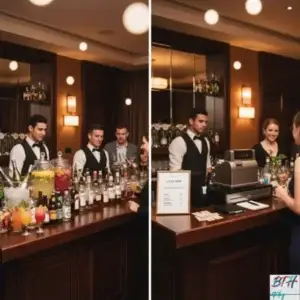
Now that you have your vision, explore the various bar service packages. Each model has distinct implications for your budget and guest experience. Knowing these options helps you make a smart choice for your celebration.
The Classic “Open Bar” Experience
The open bar is the most common choice for weddings. In this model, the host pays for all drinks. Guests can order freely during the event. It’s the ultimate gesture of hospitality, ensuring no guest has to open their wallet. Packages usually cost per person for a specific number of hours. This gives you a clear idea of your budget.
The Practicalities of a “Cash Bar” and “Drink Tickets”
With a cash bar, guests buy their own drinks. This greatly reduces the host’s cost, but some may view it as less hospitable. A common solution is to give drink tickets, like two for each guest. This allows for a couple of free drinks before switching to a cash bar. This model works well for couples on a tight budget. But, it needs clear communication with guests ahead of time.
The Flexible “Consumption Model”
A consumption bar means you pay for exactly what your guests drink. The bartending service keeps track of every beer, wine, and cocktail served. You’ll get a bill for the total at the end of the event. This can save money if your guests drink lightly. But it might lead to a much higher bill if the party gets lively. It offers flexibility, but it doesn’t provide the budget predictability of a per-person open bar package.
Hybrid Models and “BYOB” (Bring Your Own Booze) Considerations
Hybrid models offer a middle ground. You might host beer and wine but have a cash bar for liquor. Another popular choice is to host the bar for a few hours, like during cocktail hour. Then, you can switch to a cash system. Some venues and bartending services let you “BYOB.” This means you buy the alcohol yourself. They only provide the service staff, mixers, and equipment. This can save you money, but you need to calculate usage carefully. Also, you’ll have to handle buying and moving the alcohol.
Understanding Standard “Wedding Packages” and Their Inclusions
Most bartending services offer tiered packages. A basic package might include bartenders, standard mixers, and basic bar tools. Mid-tier and premium packages usually include better liquor, fresh juices, fancy garnishes, and nicer glassware. They also provide a wider selection of beer and wine. Check what’s in the package. Ask about staff hours, setup and cleanup time, ice, water stations, and insurance.
Step 3: Crafting Your Perfect “Drink Menu”
The drink menu is where your personality shines. It’s a chance to impress your guests. You can strengthen your wedding theme and add a memorable touch to the celebration. A well-curated menu balances popular favorites with personal touches.
Designing “Signature Cocktails” and “Specialty Drinks”
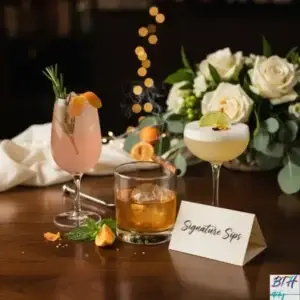
Signature cocktails are a fantastic way to personalize your wedding bar. Name drinks after yourselves, your pets, or a meaningful place in your relationship. Choose a liquor you both love or a flavor profile that matches the season. These specialty drinks add a unique touch and help bartenders serve faster. They’re easier to make than complex, off-menu requests.
Curating Your “Beers,” “Wines,” and “Spirits” Selection
You don’t need to offer everything. A curated selection is often better than an overwhelming one. Choose one or two red wines, one or two white wines, and a sparkling option. For beers, offer a popular light lager alongside a local craft IPA or seasonal ale. For spirits, cover the basics: vodka, gin, rum, tequila, whiskey, and bourbon. Choosing a “well,” “call,” or “premium” tier of liquor will have a direct effect on your package price.
Offering Thoughtful “Mocktail Options” and Non-Alcoholic “Beverages”
Don’t forget guests who aren’t consuming alcohol. Providing thoughtful non-alcoholic options is a crucial aspect of good hosting. Offer one or two signature mocktails that are as creatively made as your cocktails. Go beyond standard sodas! Ensure there is also plenty of water, iced tea, and lemonade available.
The Importance of “Garnish,” Presentation, and “Drink Menus”
Presentation elevates a simple drink into an experience. High-quality glassware, fresh garnishes like citrus twists or herbs, and clear ice are important. Drink menus at the bar do more than show options. They enhance your wedding decor and help guests order faster.
Step 4: Selecting Your Professional Bartending Team and Setup
Your bartending team and bar setup are key to your service’s success. Professionalism, skill, and aesthetics are key. They help create a smooth flow and a positive vibe for any event, whether it’s a small party or a big wedding.
The Value of “Professional Bartenders” and Skilled “Staff”
Professional bartenders do more than pour drinks. They handle inventory, keep the bar clean and organized, and engage with guests politely while serving alcohol responsibly. A skilled team can manage busy times calmly, keeping wait times short. High-quality wedding bartending services often provide certified bartenders, such as those with TIPS or TABC training, ensuring they can manage drink consumption effectively and keep guests safe throughout the celebration.
The Appeal of “Mobile Bars” and Unique Bar Setups
If your venue doesn’t have a built-in bar, a mobile bar can be a stylish and functional solution. Mobile bars can be a stunning focal point at your reception. They vary from rustic wooden bars to sleek modern spaces and repurposed horse trailers. They offer a complete station for your bartending needs. This ensures both efficiency and a polished appearance.
What to Look for in “Bartending Services” and “Event Services” Vendors
When vetting vendors, look beyond the price tag. Read reviews, check their portfolio, and ask for references. A good company will respond quickly. They will be clear about their prices and eager to answer your questions. Make sure they have experience with events like yours. This includes weddings, corporate events, and private parties. A great vendor acts as a partner in your planning process.
Step 5: Mastering the Logistics Budgeting, Contracts, and Execution
The final details are what transform a good plan into a flawless reality. Managing your bar service logistics carefully will reduce stress on the day. It helps everything run smoothly from the first pour to the last call.
Detailed “Alcohol Ordering” and Inventory Management
If you bring your own alcohol (BYOB), work with your bartending service to place the right order. They offer calculators that fit your guest count and event length. This helps you buy the right amount of liquor, beer, and wine. You’ll avoid running out or overspending.
Understanding Your “Contract” and “Liability Insurance”
Never hire a vendor without a detailed contract.
The contract must clearly list:
- Date
- Times
- Location
- Services
- Total cost
- Cancellation policy
Crucially, confirm that the bartending service carries both general and liquor liability insurance. This keeps you, the vendor, and your venue safe if an alcohol-related incident occurs.
Integrating the bar into your “wedding schedule”
Coordinate with your wedding planner and venue to determine the bar’s schedule. When will it open for the cocktail hour? Will it close during dinner to encourage guests to be seated? When is the last call? Share this timeline with your bartending staff. This way, they can be ready for busy times and slower moments during the event.
Staffing Ratios: How Many “Bartenders” Do You Need?
A general industry rule of thumb is one bartender for every 75-100 guests. If you’re serving complex or shaken cocktails, you’ll need one bartender for every 50 to 75 guests. This helps keep the service fast. Remember the role of a barback. This staff member helps bartenders by restocking ice, glassware, and alcohol. This support is key for larger weddings.
Step 6: Finalizing Your “Wedding Bar Blueprint” Customization and Vendor Partnership
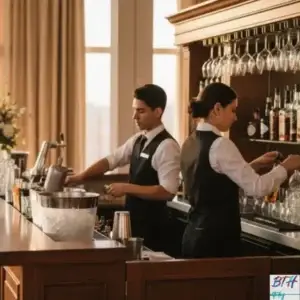
Finalizing your blueprint involves a collaborative partnership with your chosen vendor.
Schedule a final consultation to review everything:
- Guest count
- Drink menu
- Bar setup
- Staff arrival times
- Special requests
This is your chance to ensure you and your bartending service share the same vision for your perfect celebration. A good vendor will help you customize their package. They’ll make sure everything matches your dream wedding. This final check-in finalizes your plan. Now, you can relax knowing your guests are in great hands.
FAQ
1 bartender per 75–100 guests, or 1 per 50–75 guests if making specialty cocktails.
Yes many California venues allow BYOB as long as you hire an insured, RBS-certified bartender.
Typically: bartenders, mixers, ice, bar tools, setup, cleanup, and liability insurance.
Open bar provides the best guest experience; consumption-based works for light-drinking crowds.
Match them to your theme, season, personality, or story as a couple.