Hiring a licensed bartender for wedding celebrations is one of the simplest ways to protect your budget, your guest experience, and the overall flow of the reception. Couples usually start by thinking about drinks, but the better question is this: who is managing service, safety, setup, and the pace of the bar?
Quick takeaway: for most US weddings, a professional bartender is worth it when you want shorter lines, smoother cocktail hour service, better alcohol management, and fewer last-minute venue issues. Many venues also require approved or professionally trained bartenders, and alcohol rules can vary by state, county, and venue contract.
What Does a Wedding Bartender Do?
Role of a Professional Wedding Bartender
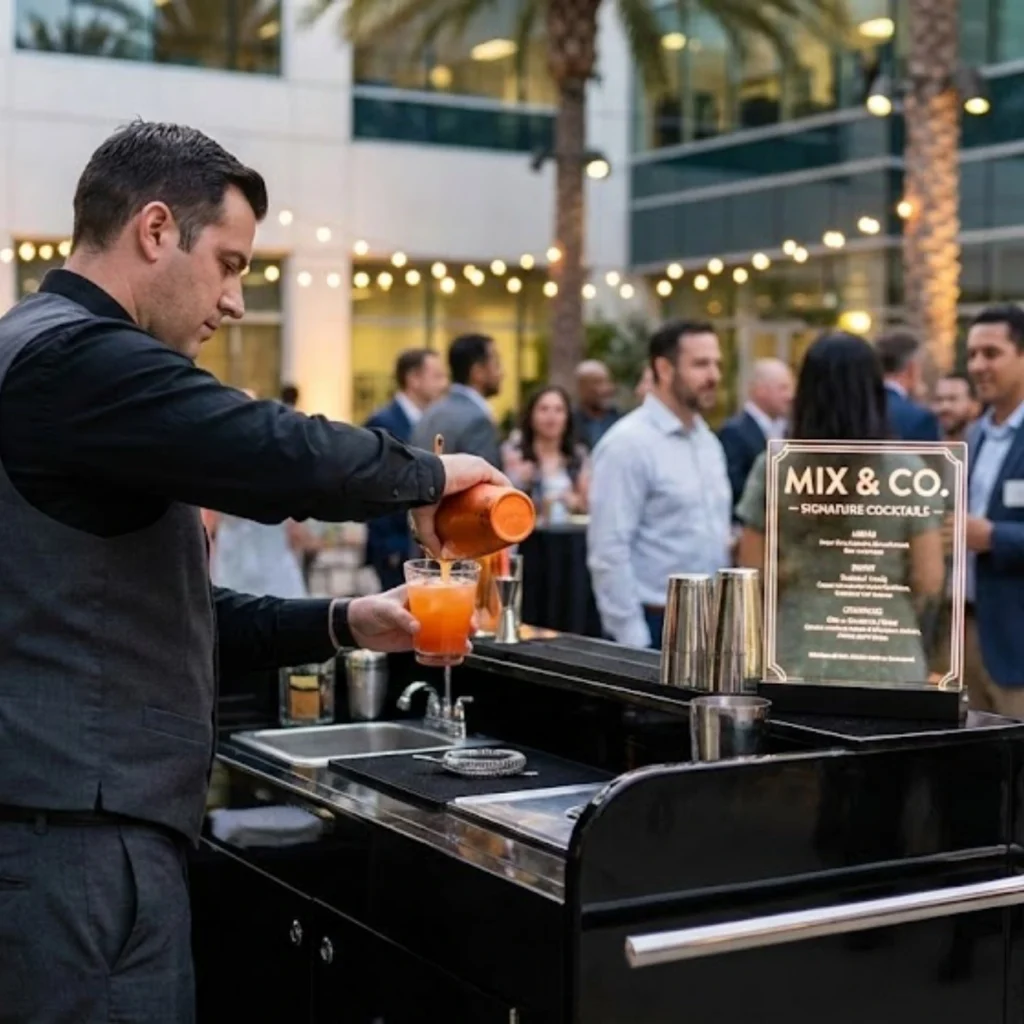
A wedding bartender does much more than pour drinks. A strong bar service team handles bar setup, ice, mixers, garnishes, timing, glassware or disposable cups, bar utensils, cleanup, and guest interaction. They also help shape the cocktail menu so the service style matches the couple’s venue, guest count, and bar budget.
How Bartenders Improve Guest Experience
The bar affects the whole room. When service is slow, guests bunch up, cocktail hour feels crowded, and the dance floor empties. When service is smooth, people move more freely and the reception feels more polished. The Knot notes that under-staffing is a major cause of long bar lines and recommends planning bar coverage based on guest count rather than guesswork.
Difference Between Venue Bars and Private Bartenders
Venue bars are convenient, but they are not always the best fit. Some venues include beverage service in-house, while others require couples to use an approved vendor list for outside bartenders or mobile bar service. A private wedding bartender can offer more flexibility with custom menus, signature cocktails, and service style, but only if the venue allows it.
Types of Wedding Bar Services
Open Bar vs Limited Bar Options
An open bar means the hosts cover all drinks for guests. A limited bar narrows the menu to selected categories, usually beer and wine, or beer and wine plus one signature cocktail. For budget-conscious couples, a limited bar often creates a cleaner cost structure without feeling restrictive. The Knot reports that adding liquor to a beer-and-wine open bar commonly adds about $10 to $15 per person.
Beer and Wine Bar Packages
Beer and wine packages are the easiest option to manage. They reduce ingredient complexity, move faster during cocktail hour, and usually need less bar equipment than a full mixed-drink setup. They also pair well with a signature bar concept if couples still want something personal.
Signature Cocktail Bar Services
A signature cocktail menu is often the best middle ground. Instead of a full bar with endless choices, couples can serve one or two drinks that match the season, theme, or personality of the big day. That could mean a Beach Bliss Margarita for a summer wedding, a Blushing Bride Punch for a garden reception, or a Rasta Rita for a tropical-style event.
Planning Your Wedding Bar Setup
Choosing the Right Bar Setup for Your Venue
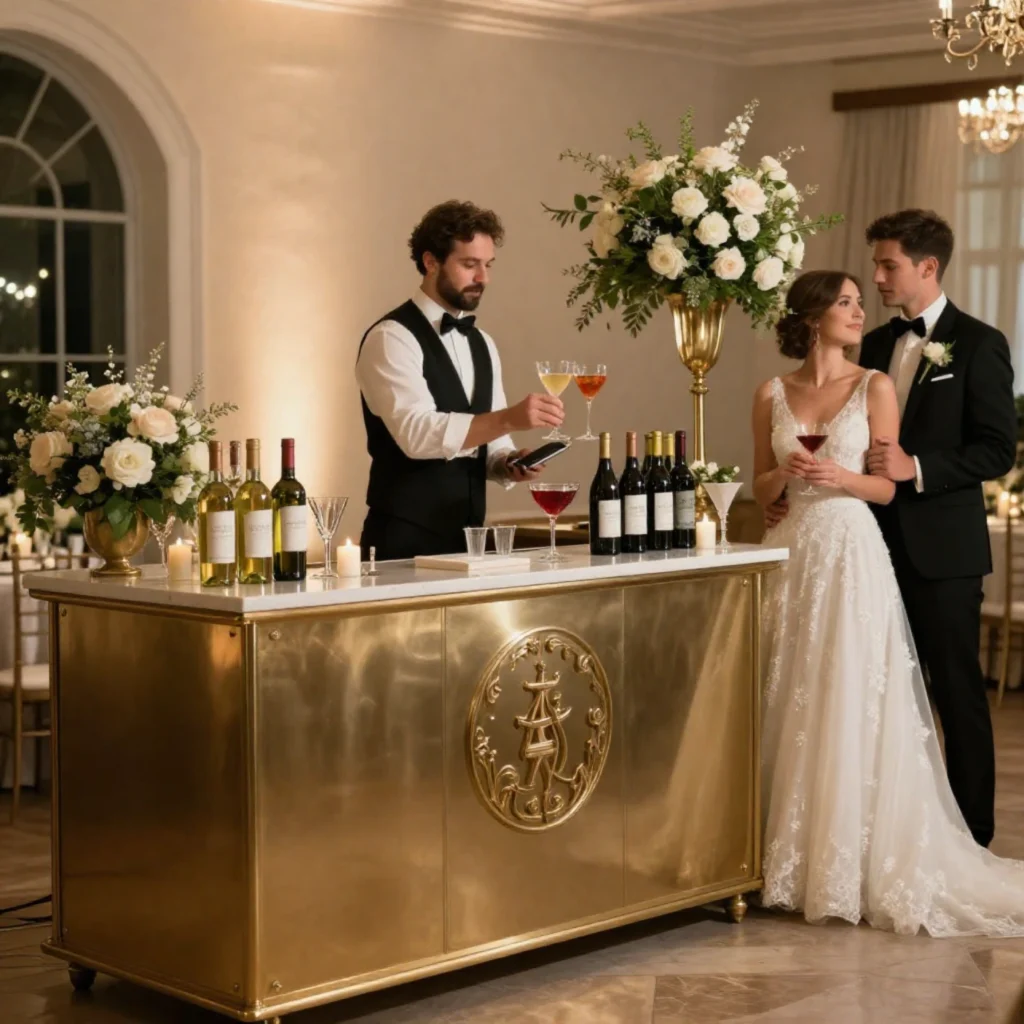
The right bar setup depends on space, power access, weather, and venue rules. Outdoor weddings may need portable bars, drink dispensers, backup ice storage, and weather protection. Indoor receptions may need a smaller footprint and tighter placement to avoid crowding entrances or dining areas.
Bar Placement for Better Guest Flow
The bar should be easy to find, but not parked in the center of every traffic path. Smart placement supports guest flow during cocktail hour, dinner transitions, and late-night dancing. If guests have to cross the whole room to order, the line becomes a bottleneck.
Essential Bar Equipment and Tools
A professional team typically brings or specifies what is needed, including:
- cocktail shakers and cocktail strainers
- bar spoons and garnishing tools
- beverage dispensing supplies
- bar mats and coolers
- disposable cups or acrylic goblets
- backup storage for mixers, garnishes, and ice
That matters because missing small tools often turns into slower service later.
Popular Drinks for Wedding Bars
Signature Cocktails for the Big Day
The best signature drinks are easy to batch, easy to describe, and easy to serve. Couples do not need an overly complex cocktail menu to make the bar memorable.
Classic Cocktails and Crowd Favorites
Classic options still work well because guests recognize them quickly. Margaritas, old fashioneds, espresso martinis, spritzes, and vodka-based drinks tend to move well at wedding receptions.
Non-Alcoholic Drinks and Mocktail Options
Non-alcoholic options should feel intentional, not like an afterthought. Sparkling water, craft sodas, mocktails, and a well-designed drink station help non-drinkers feel included and can also slow overall alcohol consumption in a positive way. The Knot recommends offering plenty of water and food when alcohol is being served to support guest safety.
How Many Bartenders Do You Need for a Wedding?
Guest Count and Bar Staffing
Staffing should follow the guest list, not just the budget. More guests and more cocktail complexity usually mean more bartenders.
Avoiding Long Lines at the Bar
Long lines are one of the fastest ways to hurt the party atmosphere. They make guests impatient and pull people away from the dance floor and social areas.
Bartender-to-Guest Ratio Guide
A practical rule of thumb is about one bartender for every 35 to 50 guests, depending on the menu. The Knot also notes that for 100 guests, some pros recommend at least two bartenders and one barback for smoother service.
Cost of Hiring a Wedding Bartender
Average Wedding Bartender Costs
Bartender costs vary by region and package structure, but current national estimates still help couples set expectations. Thumbtack’s 2026 pricing says hiring a bartender nationwide typically costs between $342 and $689 total, while event staff or bartenders often run about $35 to $100 per hour depending on scope and market.
Factors That Affect Bar Service Pricing
The biggest cost drivers are:
- guest count
- service hours
- full bar versus beer and wine
- whether mixers, cups, and ice are included
- custom cocktails and specialty ingredients
- travel, setup, and cleanup requirements
Bar Budget Planning Tips
The smartest budget move is usually not hiring the cheapest bartender. It is hiring the right team for the menu and guest count. A smaller, efficient service often beats a larger but poorly planned one.
Legal Requirements for Wedding Bartending
Liquor License and Permits
A licensed bartender for wedding events is not just a nice extra in many cases. Alcohol service rules can require a licensed or permitted provider, depending on the state and event setup. For example, California allows certain on-sale licensees to cater alcoholic beverages off-site through a caterer’s permit, while New York’s SLA says a catering permit is a one-day permit for currently licensed on-premises retailers providing alcohol at private events.
Alcohol Laws and Venue Requirements
This is the part couples should verify early. Some venues prohibit self-service entirely, and some liquor licenses require a professional bartender to pour any alcoholic items. Couples should always check the venue contract, local Alcohol Beverage Control rules, and whether outside vendors are even allowed.
Bartender Liability Insurance
Insurance matters because alcohol service creates liability exposure. The Hartford notes that liquor liability coverage can help protect against bodily injury or property damage claims tied to serving alcohol, and bartender insurance can also help cover event-related risks at private events and weddings.
Working with Beverage Catering Companies
Choosing a Beverage Catering Company
Look for a team that asks detailed questions about venue requirements, guest count, custom menus, and timing. Good vendors think through logistics, not just drinks.
Custom Cocktail Menus for Weddings
Custom menus should reflect the event, but they should also be realistic. One or two signature cocktails usually work better than a long, complicated cocktail menu.
Coordination with the Catering Team
The best beverage service feels integrated with the rest of the event. Bartenders should coordinate with the catering team on timing, water stations, glassware, and late-night service so the reception stays balanced.
Tips for Creating the Perfect Wedding Bar Experience
Unique Signature Drinks for Couples
Make them personal, but keep them practical. The best drinks are memorable and fast to serve.
Creative Bar Themes and Drink Stations
Mobile bars, themed signature bar setups, and dedicated non-alcoholic drink stations can add style without making service more confusing.
Improving the Party Atmosphere
Great bars do three things at once: keep people moving, keep the room feeling social, and keep service safe. That is why bar planning matters more than many couples expect.
Conclusion
A wedding bar should do more than serve drinks. It should support the pace, safety, and overall feel of the reception. For many couples, working with a licensed bartender for wedding celebrations is the easiest way to reduce stress, avoid service issues, and create a smoother guest experience.
If you’re comparing options for your event, it helps to choose a bartending service that understands setup, flow, and hospitality as well as the drinks themselves.