
Bartending services for weddings require the right number of bartenders to ensure drinks are flowing and guests are satisfied. Too few bartenders can lead to long lines, while the right staffing ensures fast and professional service. This guide breaks down the ideal bartender-to-guest ratio, explains what affects service speed, and helps you calculate exactly how many bartenders your wedding reception needs.
You’ve picked the venue, finalized the guest list, and selected the perfect date. Now, a crucial logistical question arises: how many bartenders do you need to keep the drinks flowing and the guests happy? Getting this number wrong can lead to long bar lines and frustrated friends, but getting it right ensures a smooth flow for your special day.
Quick Summary
For a standard wedding with beer and wine service, the golden rule is one bartender per 75 guests. If you are serving complex craft cocktails or a full bar, tighten that ratio to one bartender per 50 guests. Always consider adding a barback for groups over 100 to handle restocking and glassware, ensuring your professional service runs without a hitch.
The Core Formula: Your Bartender Starting Point
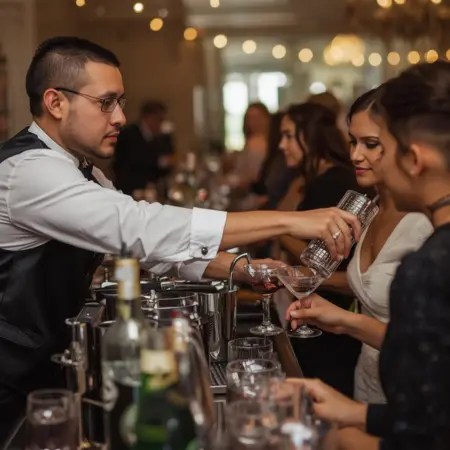
Calculating your event staffing needs doesn’t have to be a guessing game. Industry experts rely on standard ratios as a baseline before adjusting for specific event details.
The “Rule of Thumb”: One Bartender Per X Guests
Most professional bartending services operate on a simple rule of thumb: hire one bartender for every 75 guests. This ratio works well for receptions serving beer, wine, and simple mixed drinks. It strikes a balance between keeping the line moving and managing the budget.
Why This Formula is Just the Beginning
While the 1:75 ratio is a great starting point, it assumes a standard setup. Factors like a complex drink menu or a highly social crowd can slow down service speed. If every guest rushes the bar immediately after the ceremony, even a seasoned pro can get overwhelmed without backup.
Deep Dive: Key Factors Shaping Your Bartender Requirements
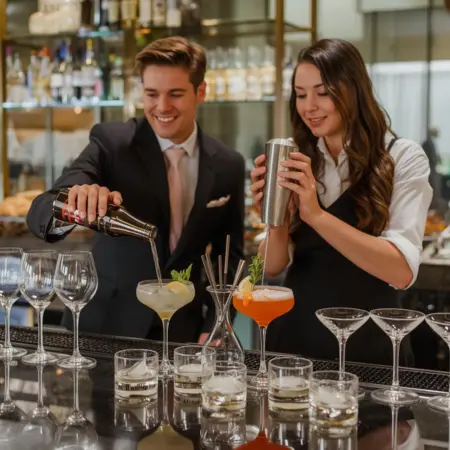
Every wedding is unique. To ensure guest satisfaction, you need to look beyond the basic headcount and analyze the specific dynamics of your celebration.
Guest Count: More Guests, More Hands
Naturally, a higher guest count requires more staff. However, the math isn’t always linear. For a wedding reception with 100-150 guests, two bartenders are standard. But if you push to 200 guests, you might need three bartenders plus a barback to maintain that smooth flow.
Drink Menu Complexity & Type of Bar Service
Are you serving simple cocktails or elaborate 12-ingredient signature drinks?
- Beer/Wine: Service is fast; one bartender per 75-100 guests may suffice.
- Full Bar / Craft Cocktails: These take time to build. Aim for one bartender per 50 guests to prevent bottlenecks.
- Consumption-based bar vs. Open Bar: Guests tend to drink more freely at an open bar with unlimited access, requiring faster service.
Event Duration & Peak Service Times
The “initial rush” usually happens right after the ceremony during cocktail hour. Everyone wants a drink at the exact same time. If your timeline is tight, having an extra bartender or mobile bar just for this hour can save the day.
Bar Setup, Layout & Logistics
If your reception space is sprawling, one central bar might cause congestion. Splitting service into two locations, perhaps a main bar and a satellite beer/wine station improves access to drinks but requires additional staffing.
Desired Service Level & Guest Experience
Do you want an intimate, attentive experience where the bartender remembers guests’ orders? Or is speed the priority? For a high-touch, luxury feel (often seen in premier staff services in cities like Los Angeles or Chicago), overstaffing is the secret to success.
Beyond the Bartender: The Critical Role of Support Staff
A bartender can’t pour drinks if they are busy washing glasses or running to the back for ice. This is where support staff becomes invaluable.
Barbacks: The Unsung Heroes of Bar Efficiency
A barback is the backbone of a well-staffed bar. They haul ice, restock alcohol, clear empty glasses, and manage trash. For any large party (over 100 guests), hiring a barback allows your bartender to focus entirely on serving guests.
Other Support Staff: Tray Pass Beverages & Banquet Staff
To relieve pressure on the bar line, consider using banquet staff for tray pass beverages upon arrival or during the toast. Champagne service at the tables also reduces the number of people heading to the bar at once.
Smart Strategies to Optimize Your Bar Service
You don’t always need to hire more people; sometimes, you just need a smarter strategy. Here are proven ways to reduce the workload and keep the party lively.
- Pre-Batching Cocktails: Have your signature cocktails pre-mixed in large dispensers or pitchers. This allows for lightning-fast pouring.
- Self-Service Options: Set up stations for water, soda, or even local craft beers (if venue laws permit). This keeps the main bar clear for mixed drinks.
- Streamlined Menu: Offer a “limited bar” with a curated range of beverages rather than a full stock. Fewer choices mean faster decision-making by guests.
- Clear Signage: Display your drink options clearly on the bar or tables so guests know what they want before they reach the front of the line.
- Mocktails & Water: Providing visible water stations and non-alcoholic options keeps guests hydrated and reduces the frequency of alcohol orders.
Special Considerations & Nuanced Scenarios
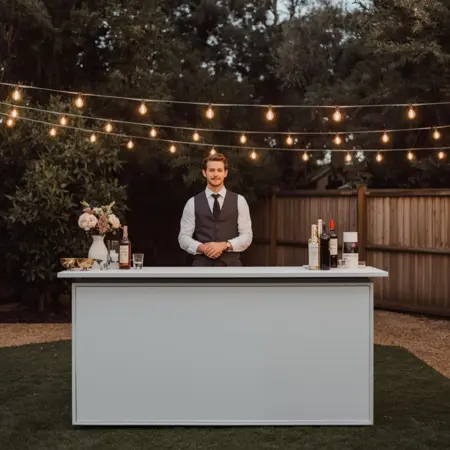
Sometimes, the standard rules don’t apply. Here are a few specific scenarios where you might need to adjust your plan.
- The “Extra Bartender” Decision: If you are on the fence (e.g., you have 85 guests), always hire the extra bartender. It’s better to be overprepared than to have guests waiting 20 minutes for a drink.
- Alcohol Laws & Liability: In many regions, professional bartending services are required to monitor guest intoxication. Worried about drunk driving? Pros are trained to cut guests off tactfully, reducing your liability.
- Venue-Specific Challenges: Does the venue lack a sink or ice machine? Mobile bartender services often bring their own portable bars, but they may need extra setup time or staff to manage the logistics.
- Budget Constraints: If you can’t afford ample staff, simplify the menu drastically to just beer and wine to keep the service speed high.
Choosing Your Bar Team: Professional Service for Your Special Day
Your cousin might know how to mix a rum and coke, but a wedding requires a professional touch.
The Benefits of Hiring a Dedicated Service
A professional bartending service brings insurance, equipment (like beverage napkins, shakers, and openers), and peace of mind. They handle the set-up and clean-up, letting you enjoy the dance floor.
Communication is Key
Discuss your timeline, guest preferences, and venue layout with your potential vendors. Be clear about whether tip jars are allowed, as this can affect the hourly rate.
Essential Questions to Ask Your Bartending Service
- Do you carry liquor liability insurance?
- What is your standard staff-to-guest ratio?
- Do you provide a mobile bar if the venue doesn’t have one?
- Can you handle local brews or special requests?
Final Thoughts / Encouragement
Getting the bartender count right is about balancing budget with guest experience. A well-staffed bar is the cornerstone of an enjoyable wedding reception. It keeps the energy up, the lines down, and ensures everyone from your college friends to your grandparents has a great time.
If you are looking for experienced professionals who understand the nuances of wedding service, from creating delicious signature drinks to managing the flow of a large crowd, we are here to help.
Ready to secure the perfect team for your big day? View our portfolio at By The Hour Bartending to see how we can elevate your celebration.
FAQ
For 100 guests, the standard recommendation is two bartenders. If you are only serving beer and wine, you might get away with one very experienced bartender and a barback, but two is safer to avoid lines.
If you have more than 75 guests or a full bar setup, yes. A barback keeps the ice filled and glasses clean, allowing the bartender to focus solely on serving drinks, which speeds up the line significantly.
Absolutely. Mobile bartender services are designed for private events at locations without built-in facilities. They bring the bar structure, tools, and coolers to you, turning any backyard into a professional venue.
Costs vary by region (e.g., Los Angeles vs. rural areas) and experience level. Generally, expect to pay between $35-$75 per hour per bartender. Some services also charge a setup fee or require a minimum number of hours.
This is a personal preference. Allowing a tip jar often lowers the hourly rate you pay the bartending service. However, some couples prefer a “hosted” feel where guests don’t have to tip; in this case, you should plan to tip the staff generously at the end of the night.