
Organizing bartender services for a wedding that’s small and intimate allows you to connect deeply with every single person in the room. Even with a smaller guest list, the bar remains the central hub of celebration. Whether you envision a cozy backyard gathering or a chic dinner party, getting the drinks right is crucial for setting the mood.
This guide dives into everything you need to know about organizing bartender services for wedding celebrations that are intimate yet unforgettable. From crafting the perfect menu to understanding liability, we’ll ensure your toast is the highlight of the night.
Quick Summary
Planning a bar for a micro-wedding or intimate event doesn’t mean cutting corners on quality. You need to decide between a professional bartending service or a DIY approach based on your budget and liability comfort level. Essential steps include using a drink calculator to estimate alcohol needs, curating a menu with signature cocktails, and ensuring you have the right bar tools and glassware. Safety is paramount, so consider liquor liability insurance even for home events.
Introduction: Why the Bar Matters, Even for Intimate Celebrations
The bar is more than just a place to grab a drink; it’s where stories are shared and memories are made. For intimate celebrations, the bar experience sets the rhythm of the evening. A clunky self-serve station can cause bottlenecks, while a smooth, professional service keeps the energy flowing.
The Unique Charm of Small Weddings and the Role of Beverages
Small weddings offer a unique opportunity to personalize every detail, including what’s in the glass. You aren’t catering to the masses, so you can opt for premium spirits, local craft bottled beers, or specific wines that tell a story about your relationship. The beverages become a conversation piece rather than just a refreshment.
What This Guide Covers: Professional Services vs. DIY Solutions for Intimate Events
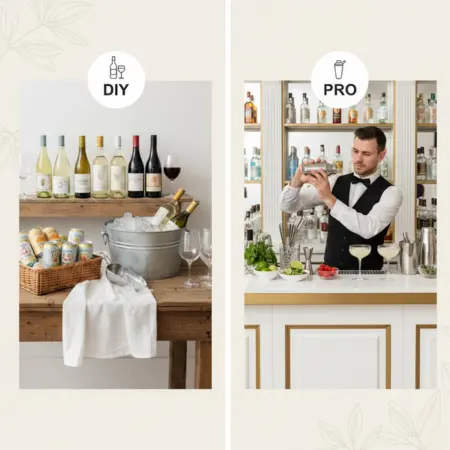
We will explore two main paths: hiring professional bartenders versus managing a DIY bartending setup. You’ll learn how to handle guest safety, navigate liquor licenses, and choose the right mobile bar services if you decide to go pro.
Section 1: Defining Your Small Wedding Bar Vision
Before you buy a single bottle, you need a plan. Your vision will dictate everything from the budget to the bar setup.
Understanding Your Guest Count and Desired Vibe
Your guest count drives every decision. A wedding with 20 people feels different than one with 50.
- 20 Guests: Intimate, dinner-party feel. You might get away with premium bottled wines on the table.
- 50 Guests: Requires a dedicated bar service area to prevent crowding.
- Vibe Check: Do you want a formal cocktail hour with passed trays, or a relaxed self-service bar where guests help themselves to canned cocktails?
Setting a Realistic Bar Budget for a Smaller Scale Event
A smaller guest list generally means a smaller bar budget, but per-person costs can creep up if you aren’t careful.
- Open Bar: The most gracious option, but expensive.
- Cash Bar: Generally frowned upon for weddings, but sometimes necessary.
- Modified Open Bar: Beer and wine only, perhaps with one signature drink.
To save money, skip the top-shelf liquors for mixed drinks and focus on mid-range brands. Canned wines and beers are also budget-friendly and reduce waste.
Deciding Between Professional Bartending Services and DIY Solutions
This is the biggest fork in the road.
- Professional Bartenders: They handle setup, service, and cleanup. They often carry liquor liability insurance, which is a huge plus.
- DIY: You buy the alcohol and rent the glassware. You save on labor but take on more work and risk.
- Hybrid: Hire a staffing agency like Premier Staff just for the service, while you provide the alcohol.
Section 2: Crafting the Perfect Drink Menu for an Intimate Setting
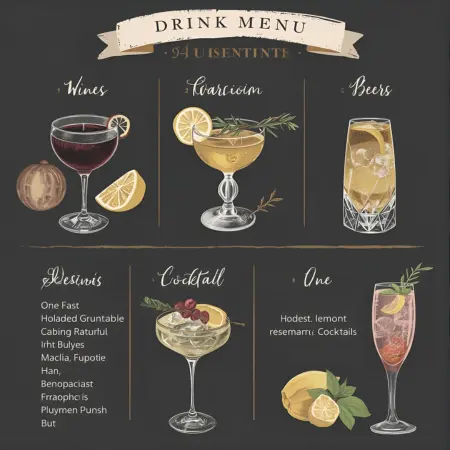
A curated menu prevents decision fatigue and keeps costs down. You don’t need a fully stocked bar to impress your guests.
Thoughtful Beverage Options and Curated Drink Menus
Limit your beverage options to a few high-quality choices. A good rule of thumb for small weddings:
- Two types of beer (one light, one craft/local).
- Two types of wine (one red, one white).
- One or two spirit options for basic mixed drinks.
- Plenty of non-alcoholic options like water and sodas.
The Power of Signature Cocktails and Refreshing Mocktails
Signature cocktails add a personal touch and speed up service since they can be pre-batched.
- The “His & Hers”: Pick one drink representing each partner.
- Seasonal Ingredients: Use citrus fruits and fresh herbs for a summer wedding.
- Mocktails: Don’t forget non-drinkers! A fancy lemonade or sparkling fruit punch in drink dispensers looks elegant and tastes great.
Simplifying Alcohol Procurement and Estimation with a Drink Calculator
Use a drink calculator to avoid overbuying. A standard formula is one drink per person, per hour.
- Example: 40 guests x 4 hours = 160 drinks.
- Breakdown: 50% wine, 30% beer, 20% spirits (adjust based on your crowd).
- Pro Tip: Buy from liquor stores that allow returns on unopened bottles.
Managing Specialty Drinks: Champagne Toasts and Beyond
The champagne toast is classic, but it adds complexity.
- Logistics: Who pours it? When is it served?
- Alternative: Let guests toast with whatever they are drinking. It saves on renting extra flute glassware and buying cases of bubbly that might go unfinished.
Section 3: DIY Bartending for Small Weddings: A Practical Guide
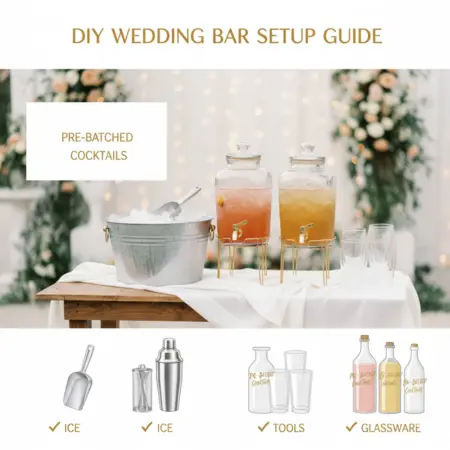
If you choose the DIY route, preparation is your best friend. Here is how to execute a flawless self-serve bar or friend-staffed station.
Essential Bar Setup and Equipment for Limited Spaces
You don’t need a commercial bar, but you do need a dedicated space.
- Surface: A sturdy table with a waterproof tablecloth.
- Cooling: Ice storage is critical. You need ice for drinks and ice to keep bottles cold. Rent coolers or galvanized tubs.
- Tools: Ensure you have bar spoons, cocktail shakers, cocktail strainers, and garnishing tools.
Choosing Appropriate Drinkware and Glassware
Real glass elevates the event, but high-quality acrylic is safer for outdoor or pool-side venues.
- All-Purpose Wine Glasses: Can serve wine, cocktails, and water.
- Rentals: A catering company or party rental shop can deliver and pick up dirty glasses, saving you from washing dishes at 2 AM.
Strategies for Pre-Batching and Simplifying Drink Preparation
Pre-batching is the secret weapon of DIY bartending.
- Mix your custom cocktails in large pitchers or drink dispensers before the ceremony.
- Leave out the ice so the drink doesn’t dilute.
- Set out simple garnishes like lemon wheels or mint sprigs.
- Guests can simply pour over ice and enjoy.
Implementing a Self-Service Bar Safely (with important cautions)
A self-service bar is risky because there is no “gatekeeper” to monitor consumption.
- Avoid Shots: Do not put out shot glasses.
- Keep it Light: Stick to beer, wine, and canned cocktails.
- Monitor: Ask a responsible friend or wedding planner to keep an eye on the self-serve stations and tidy up empty bottles.
Section 4: When to Hire a Professional Bartender (Even for Small Weddings)
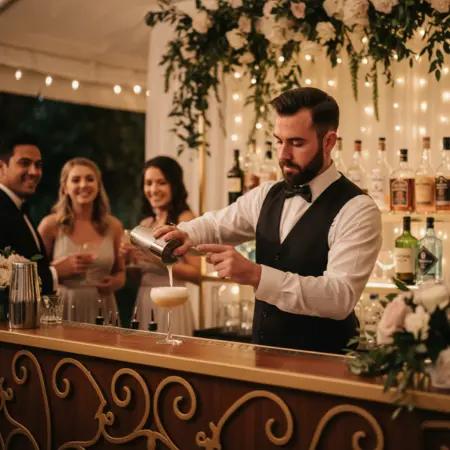
Sometimes, peace of mind is worth the bartender’s costs.
The Unseen Value of a Professional Bartender for Small Events
A pro does more than pour drinks. They monitor guest behavior, manage the ice storage, and handle trash removal at the bar. They ensure that alcohol-related risks are managed professionally, which is vital if you are hosting at a private home or a venue like Palafox Wharf Waterfront.
Finding the Right Wedding Bartender or Mobile Bar Service
Look for specialized mobile bartending companies.
- Mobile Bar: These often come in converted horse trailers or vintage caravans (like a bar trailer), adding a massive style factor.
- Private Bartending: Individual freelancers who can work with your existing setup.
- Sources: Check platforms like The Bash or ask your photographer (e.g., Wendy Wilson Photography) for recommendations, as they see bartenders in action constantly.
Understanding Bartender Costs, Contracts, and Tipping Etiquette
Bartender costs vary by region. In Atlanta, Georgia, rates might differ from Atlantic Canada.
- Hourly Rate: usually $30-$50+ per hour per bartender.
- Service Fee: often added to the contract.
- Gratuity: Check if prepaid gratuity is included. If not, a tip jar is standard, or you can tip out at the end of the night to keep the bar jar-free.
Section 5: Legalities, Safety, and Logistics for Any Small Wedding Bar
Legal/safety issues are the least fun part of planning, but the most important.
Navigating Alcohol Laws, Liquor Licenses, and Special Permits
Laws vary wildly. In some places, you need a special permit or liquor license to serve alcohol at a venue that isn’t licensed.
- ABC Laws: Check with your local control board (like the California Department of Alcoholic Beverage Control) or liquor board.
- Certification: Hiring staff who are CA Responsible Beverage Service Certified (or your local equivalent) protects you.
Prioritizing Guest Safety and Preventing Overconsumption
You are responsible for your guests.
- Insurance: Get bartender insurance or a policy from the Food Liability Insurance Program.
- Food: Always serve food when alcohol is flowing.
- Water: Make water dispensers prominent and free.
Practical Logistics: Bar Cleanup, Trash Removal, and Transportation
Who takes out the recycling?
- Cleanup: Ensure your contract includes trash removal of bar waste.
- Transport: If you bought the booze, you need to transport the leftovers home.
- Safe Rides: Have Uber codes or a shuttle ready for guests.
Making the “Last Call” in an Intimate Wedding Setting
The Last Call signals the night is winding down.
- Timing: usually 30-45 minutes before the end of the reception.
- Switch: Transition to coffee or water.
- Announcement: Have the DJ or bartender announce it politely.
Conclusion: Making Informed Choices for a Memorable Small Wedding Bar Experience
Whether you hire a top-tier beverage catering company or DIY a charming signature bar, the goal is the same: a joyful, safe celebration.
Recap of Key Takeaways for DIY vs. Professional Bartending
- DIY: Good for very small groups (under 30), tight budgets, and simple beer/wine menus. Requires more work and risk management.
- Professional: Best for peace of mind, complex cocktail menus, and larger guest counts. Includes benefits like liquor liability insurance and setup/cleanup.
Empowering You to Create a Perfect and Stress-Free Beverage Service
Your small wedding deserves a big celebration. By planning ahead whether that involves renting a cute mobile bar or pre-batching delicious drinks you ensure that you spend your night dancing with friends, not worrying about the ice running out.
FAQ
Yes, for 50 guests, hiring at least one professional bartender is highly recommended. They manage the flow of drinks, keep the area clean, and most importantly, monitor guest alcohol consumption to ensure safety. A DIY setup for 50 people often leads to messy stations and overwhelmed hosts.
A simple rule is one drink per person per hour. For 50 guests over 4 hours, you would need approximately 200 drinks. A typical breakdown is 50% wine, 20% beer, and 30% spirits, but adjust this based on whether your crowd prefers mixed drinks or bottled beers.
Yes, purchasing your own alcohol from liquor stores (often called “stocking the bar yourself”) is usually cheaper than purchasing a beverage package from a venue or caterer. Just ensure your venue allows this and check if they charge a corkage fee.
An open bar means the host pays for all the drinks, and guests pay nothing. A cash bar requires guests to pay for their own drinks. For weddings, open bars or modified open bars (beer and wine only) are the standard etiquette, while cash bars are generally avoided unless the budget is extremely tight.
Serving homemade pre-batched cocktails is a great idea for DIY weddings. However, check your local ABC laws and venue regulations. Some venues require all alcohol to be served by a licensed and insured professional, meaning you can’t just bring a pitcher of margaritas from home without a special permit or licensed server.